56 - Do harmonics from one load naturally cancel with harmonics from another load.
5:13
What are harmonics? Harmonics are distortions that that occur at a multiple of the fundamental frequency in a power system, which in the US is a 60 hertz sinusoidal wave. Source of harmonics include non-linear loads that typically include power electronics such as variable frequency drives (VFDs) and LED lights. Current harmonics cause excess heating of transformers and cables, and damage electrical equipment. Harmonics can also cause voltage distortion, often resulting in the mis operation of equipment during critical applications. Calculating harmonics and measuring harmonics are critical steps in selecting the best harmonic solution to reduce the total harmonic distortion or THD on a power system to comply with the IEEE-519 standard. • Harmonic Currents: The discussion starts with a question on how harmonic currents contribute to distorted waveforms, emphasizing the need to understand their mathematical representation rather than their physical existence. We then calculate the total harmonic distortion based on reference to a fundamental or 60 Hz current. • Fourier Analysis: Fourier analysis is critical to understand to break down waveforms into their constituent frequencies. This analysis is important for understanding the composition of waveforms and their impact on power systems. • Phase Angles and Harmonics: The phase angle of each harmonic component is important to understand so that once the waveform is broken into its pieces, or harmonics, it can be rebuilt by combining the individual harmonics. If the phase angle isn’t correct, the waveform cannot be properly rebuilt. importance of phase angles in the mathematical representation of waveforms. • System Design Concerns: An example of understanding the magnitude of harmonic currents shows how 20% distortion only yields 102% rms current and explains why the percentages can be misleading. Eaton’s Harmonic Frequently Asked Question’s FAQs collection of videos hosted by Dan Carnovale can help individuals from all different levels of education understand what harmonics are and explain many different solutions for mitigating harmonics on an electrical power system. Dan Carnovale P.E. has decades of experience in power quality and harmonics and is a recognized electrical industry expert in power quality and power systems. He is the creator and director of Eaton’s Power Systems Experience Centers (PSEC) in Pittsburgh PA and Houston TX. The PSECs provide visitors live demonstrations of hands-on power quality and harmonic situations and solutions can be seen first-hand in the Power Quality Lab. Visit Eaton’s harmonics knowledge website featuring harmonic solutions, harmonic calculators, access to white papers, and more: https://www.eaton.com/harmonics See our entire harmonics FAQs playlists: https://www.youtube.com/watch?v=U36ywxWHIy8&list=PL8XobqCtN9Z8maXVw0kYDLjmhBO275-bE For an educational overview of harmonics in person, visit one of Eaton’s Power Systems Experience Centers: http://eaton.com/experience Chapters 00:00 00:10 Intro 00:58 Example 1 – harmonics from drives 03:46 Example 2 – harmonics from transformer #harmonics #powerquality #electricalengineering #electricalsafety #eatonexperience #experiencecenter
What are harmonics? Harmonics are distortions that that occur at a multiple of the fundamental frequency in a power system, which in the US is a 60 hertz sinusoidal wave. Source of harmonics include non-linear loads that typically include power electronics such as variable frequency drives (VFDs) and LED lights. Current harmonics cause excess heating of transformers and cables, and damage electrical equipment. Harmonics can also cause voltage distortion, often resulting in the mis operation of equipment during critical applications. Calculating harmonics and measuring harmonics are critical steps in selecting the best harmonic solution to reduce the total harmonic distortion or THD on a power system to comply with the IEEE-519 standard. • Harmonic Currents: The discussion starts with a question on how harmonic currents contribute to distorted waveforms, emphasizing the need to understand their mathematical representation rather than their physical existence. We then calculate the total harmonic distortion based on reference to a fundamental or 60 Hz current. • Fourier Analysis: Fourier analysis is critical to understand to break down waveforms into their constituent frequencies. This analysis is important for understanding the composition of waveforms and their impact on power systems. • Phase Angles and Harmonics: The phase angle of each harmonic component is important to understand so that once the waveform is broken into its pieces, or harmonics, it can be rebuilt by combining the individual harmonics. If the phase angle isn’t correct, the waveform cannot be properly rebuilt. importance of phase angles in the mathematical representation of waveforms. • System Design Concerns: An example of understanding the magnitude of harmonic currents shows how 20% distortion only yields 102% rms current and explains why the percentages can be misleading. Eaton’s Harmonic Frequently Asked Question’s FAQs collection of videos hosted by Dan Carnovale can help individuals from all different levels of education understand what harmonics are and explain many different solutions for mitigating harmonics on an electrical power system. Dan Carnovale P.E. has decades of experience in power quality and harmonics and is a recognized electrical industry expert in power quality and power systems. He is the creator and director of Eaton’s Power Systems Experience Centers (PSEC) in Pittsburgh PA and Houston TX. The PSECs provide visitors live demonstrations of hands-on power quality and harmonic situations and solutions can be seen first-hand in the Power Quality Lab. Visit Eaton’s harmonics knowledge website featuring harmonic solutions, harmonic calculators, access to white papers, and more: https://www.eaton.com/harmonics See our entire harmonics FAQs playlists: https://www.youtube.com/watch?v=U36ywxWHIy8&list=PL8XobqCtN9Z8maXVw0kYDLjmhBO275-bE For an educational overview of harmonics in person, visit one of Eaton’s Power Systems Experience Centers: http://eaton.com/experience Chapters 00:00 00:10 Intro 00:58 Example 1 – harmonics from drives 03:46 Example 2 – harmonics from transformer #harmonics #powerquality #electricalengineering #electricalsafety #eatonexperience #experiencecenter
Electrical distribution Similar Videos
-
Power density trends in the medium-voltage industry | Eaton PSEC
7:25
Rising electrification, grid modernization, and data center growth are driving the need for higher medium voltage power density. Learn what this means for medium-voltage switchgear design, efficiency, and reliability.
-
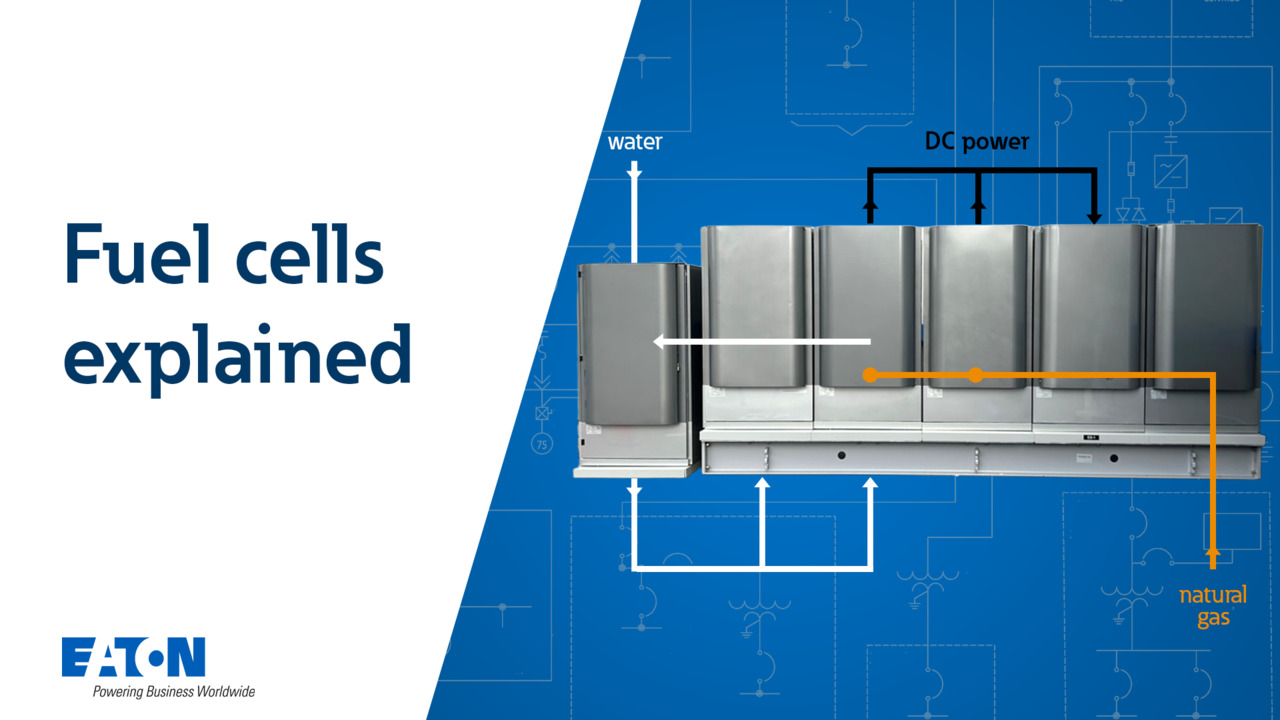
Fuel cells explained | Eaton PSEC
13:31
Learn how fuel cells work and how they deliver continuous, clean power. Fuel cells can integrate seamlessly with microgrids, support islanded operation, reduce utility demand, and enhance overall reliability and resilience.
-
Eaton Tech Day 2025 highlights
0:30
Eaton Tech Day is an electrical industry focused seminar that showcases the latest in power management, electrical safety, energy efficiency, grid resiliency, and energy transition.